

 sales@itpstyli.com


2/5/26
Understanding When To Use Diamond-Coated vs. Ruby Styli
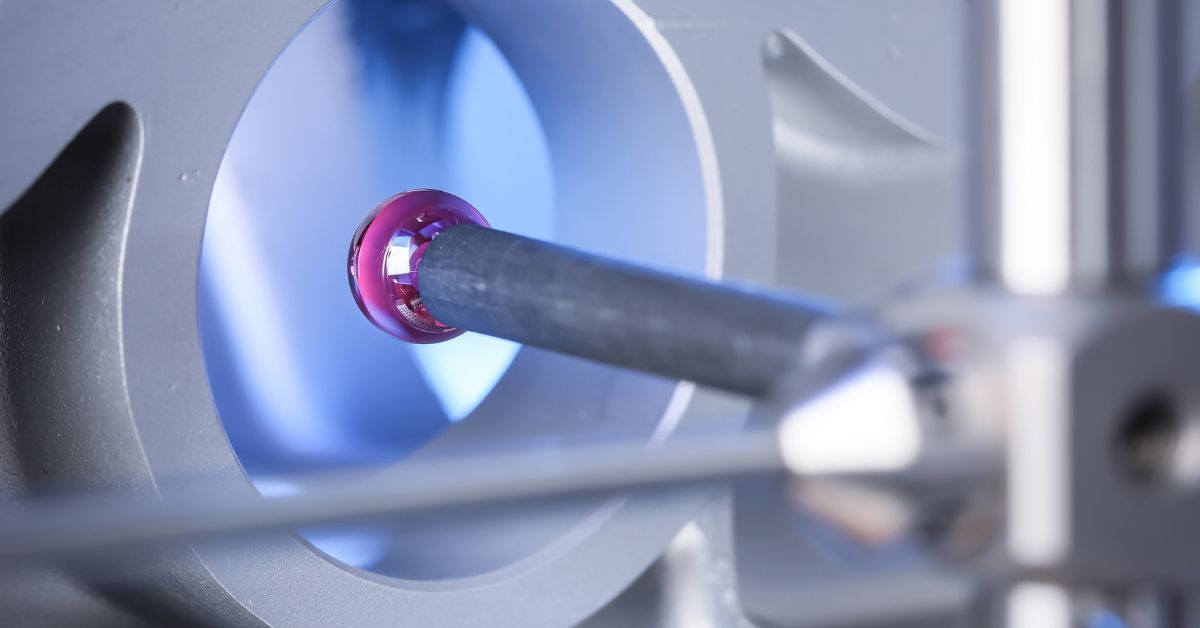
Every measurement lab has its own challenges, and the material selection for styli decides the outcome. Between scanning abrasive workpieces and chasing the highest accuracy, small choices have major consequences. Understanding when to use diamond-coated or ruby styli helps you make confident, data-driven decisions for your unique process. With the right tip, your CMM becomes a true asset: dependable, precise, and ready for anything.
The Key Factors That Determine Stylus Material Choice
Making an informed decision requires evaluating several operational variables. Your specific application will guide you toward the ideal material.
Workpiece Material
The material of the component you are measuring is the most important factor. Ruby, a form of aluminum oxide, is an extremely hard and smooth material, making it a versatile default for many applications. It works exceptionally well when measuring steel, cast iron, and other nonferrous metals.
However, ruby has a high affinity for aluminum. When scanning aluminum surfaces, adhesive wear becomes a major problem, as aluminum particles can easily bond to the ruby tip. For aluminum, as well as cast iron in some high-wear situations, a different material is required.
Measurement Method
How you measure also dictates your choice. For simple touch-trigger probing, where the stylus makes discrete contact points on the surface, ruby is often sufficient, provided the workpiece material is compatible.
In contrast, contact scanning applications, where the stylus is dragged across a surface to gather thousands of data points, create more friction and wear. This continuous contact accelerates both form wear and the potential for material pickup. High-intensity scanning operations require a more robust stylus material to maintain accuracy throughout the measurement routine.
Production Volume and Wear Expectations
Consider your production environment. A low-volume quality lab that inspects a few parts per day will have different wear expectations than a high-volume manufacturing line where a CMM runs continuously.
In high-volume settings, the cost of frequent stylus replacements and recalibrations adds up quickly. Investing in a more durable stylus material from the outset can yield substantial long-term savings by reducing downtime and tooling costs. The higher the measurement frequency, the more critical wear resistance becomes.
Accuracy and Stability Requirements
Finally, the required tolerance of your measurements plays a role. For applications demanding the highest levels of precision and thermal stability, the material properties of the stylus system are paramount. While the tip is crucial, the stem material (such as carbon fiber or ceramic) also contributes to the stylus's overall stiffness and stability.
For mission-critical components in industries such as aerospace or medical device manufacturing, a stylus configuration that offers maximum rigidity and minimal thermal expansion is necessary to achieve the required accuracy.
Direct Comparison: Ruby vs. Diamond-Coated
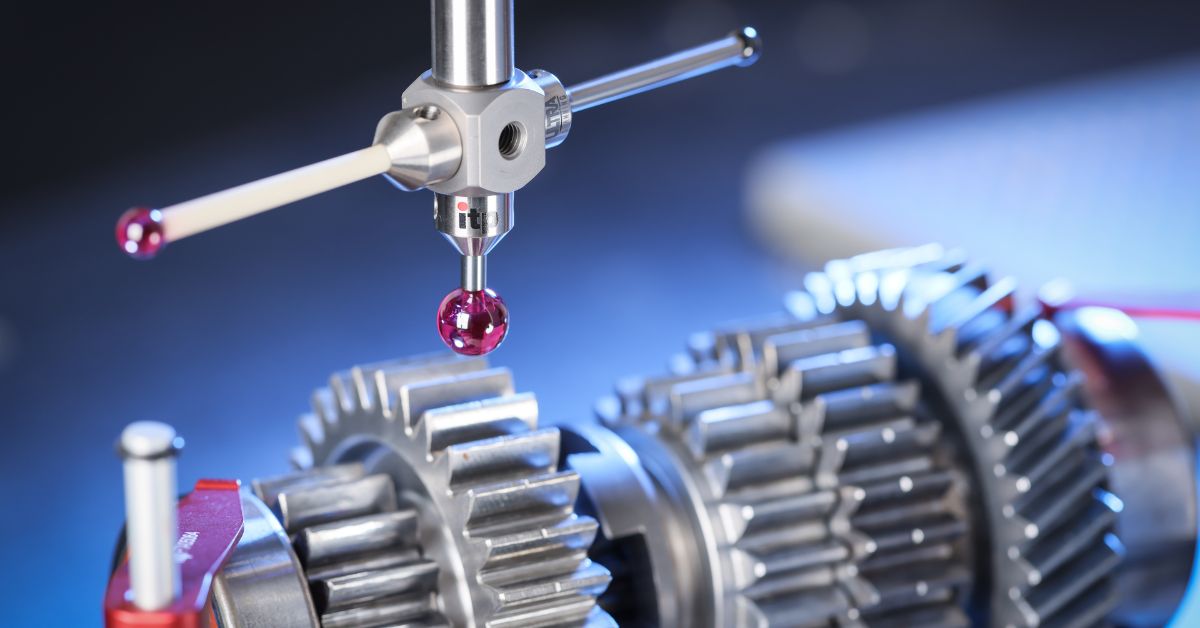
When you think of the industry standard for CMM styli, think ruby. Ruby styli remain the more economical option, making them a practical choice for general-purpose inspection where wear rates are predictable and moderate. Their consistent spherical geometry also provides excellent baseline accuracy for most touch‑trigger routines. For teams balancing performance with budget, ruby offers a reliable, cost-effective starting point.
Diamond styli stand apart in environments where long-term dimensional stability is essential, especially when measurement routines run continuously. Their ultra-hard surface maintains ball roundness far longer, which helps reduce calibration drift over extended use. Although the initial investment is higher, the extended service life and measurement consistency deliver a stronger return in demanding production settings.
Signs You’re Using the Wrong Stylus Material
Even with a well-designed measurement routine, the wrong stylus material can quietly undermine accuracy and consistency. When the stylus isn’t matched to the demands of your application, subtle performance issues start to appear long before the tip shows visible wear.
- Unexpected measurement drift that appears even after proper cleaning, calibration, and environmental checks.
- Shortened stylus life where tips need replacement far sooner than your typical maintenance cycle.
- Inconsistent results between similar parts, especially when the same program, fixturing, and operator are involved.
- Higher‑than‑normal calibration frequency, suggesting the stylus isn’t maintaining geometric stability under your workload.
- Surface interaction issues such as chatter marks, micro‑scratching, or subtle changes in probe behavior during scanning.
- Performance drop‑off during long routines, where accuracy degrades the longer the program runs.
Recommendations Based on Common Scenarios
To simplify the choice, here are some practical recommendations based on typical measurement tasks:
- For touch-probing hardened steel, plastics, or titanium parts: A standard ruby stylus is an excellent and cost-effective choice. Its properties are well-suited for these materials in discrete-point applications.
- For contact scanning aluminum components: A diamond-coated stylus is highly recommended. It will prevent material pickup, maintain accuracy over long scanning paths, and provide a much longer service life than ruby.
- For measuring cast iron parts: The choice depends on the method. For touch-probing, ruby is adequate. However, for high-volume scanning of cast iron surfaces, the abrasive nature of the material makes a diamond-coated stylus a more reliable and durable option.
- For high-volume, continuous scanning on any material: The enhanced wear resistance of a diamond-coated stylus will almost always provide better long-term value by reducing the frequency of replacement and recalibration.
Why High Quality Styli and Accessories Still Matter
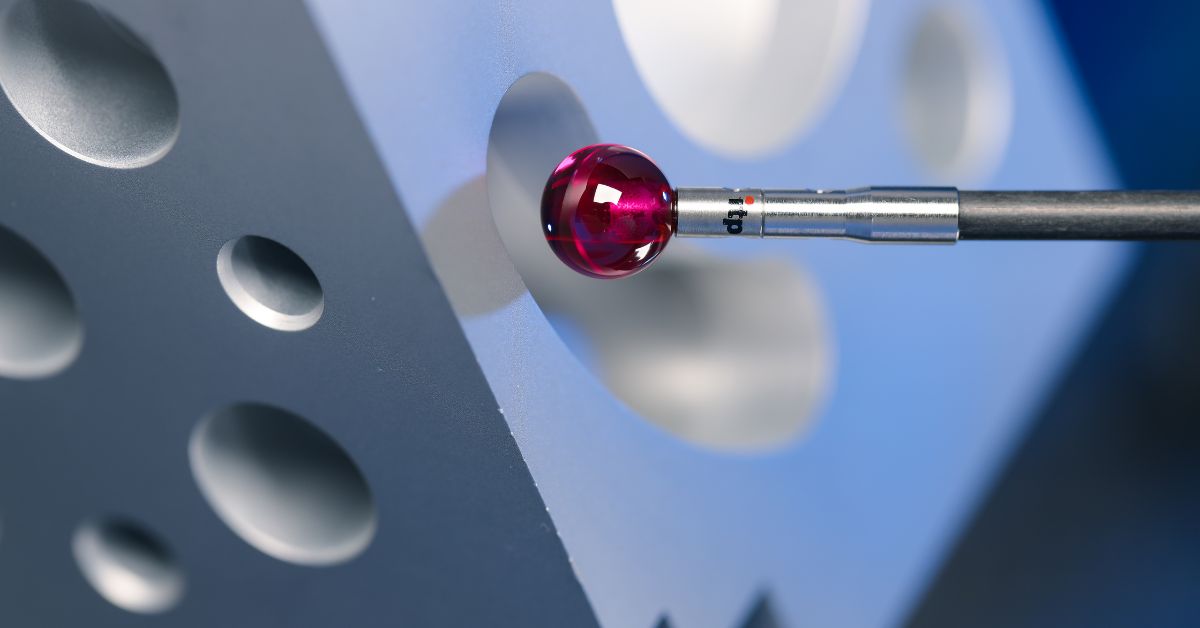
Choosing the right material is only part of the equation. The overall quality of the stylus and its components, from the thread mount to the stem, is just as important. A high-quality stylus is manufactured to exacting geometric tolerances, with a perfectly spherical tip and a flawless surface finish. These attributes are essential for repeatable measurements.
At itpstyli, we provide a comprehensive range of precision-engineered styli and accessories to meet the needs of modern manufacturing. With a vast inventory of over 6,000 items, we are positioned to deliver solutions for nearly every application, with same-day delivery. Our commitment is to provide not just a product, but a complete solution backed by over 100 years of collective CMM and styli experience.
Understanding when to use diamond-coated or ruby styli is a key skill for any quality professional. By matching the stylus material to your specific application, you enhance the integrity of your measurement data and support the efficiency of your entire quality control process.