

 sales@itpstyli.com


8/17/26
Navigating Diamond Stylus Needs for Titanium Implants
Implant inspection leaves little room for a stylus choice that looks right on paper but performs poorly on the machine. Navigating diamond stylus needs for titanium implants starts with understanding when the contact tip supports the inspection strategy and when it merely adds cost. The right decision depends on how the stylus interacts with the surface and what the process must sustain over time. A closer look at those demands helps separate a justified diamond application from an unnecessary upgrade.
Why Titanium Implants Present Distinct Measurement Challenges
Titanium implant components frequently combine tight tolerances with small features and complex contours. The same part may include polished surfaces, textured regions, narrow transitions, or deep internal geometry.
Surface interaction plays a critical role in measurement outcomes. Repeated contact influences tip condition over time, particularly during dense scanning routines. A stylus that changes due to wear or accumulated material introduces another variable into measurement performance. Inspectors need to evaluate the full contact environment, not merely workpiece hardness.
What a Diamond Stylus Offers During Titanium Inspection
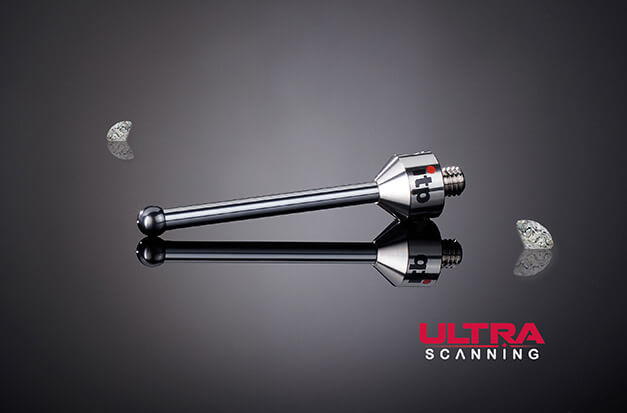
A diamond-coated sphere provides a hard contact surface intended for demanding metrology work. Manufacturers position diamond-coated styli for applications where premature wear or material pickup would interfere with sustained scanning performance. Its value depends on repeated contact behavior.
Wear Resistance During Repeated Measurement
High-volume inspection places the same stylus against many parts over long production runs. A hard diamond surface is designed to retain its form under demanding contact conditions. Maintaining tip roundness protects the relationship between the qualified stylus geometry and the points collected during measurement.
Wear resistance becomes more relevant when a process relies on frequent scanning or when stylus replacement downtime disrupts throughput. Its value depends on a rigid, correctly qualified configuration.
Resistance to Material Buildup
Material pickup changes the effective shape of a stylus tip. Even a small deposit alters contact with the part and influences results before the buildup is obvious to the operator. Diamond-coated spheres are designed to resist this type of accumulation in demanding scanning applications.
Titanium inspection still requires routine tip checks. A resistant surface reduces one risk, but it does not remove the need for process control. Judge performance through qualification results and behavior on the actual implant surface.
Potential Value in Scanning Applications
Scanning creates sustained contact as the stylus follows a surface, collecting many points. That repeated interaction imposes different demands on the tip than isolated touch-trigger measurements do. Diamond technology is commonly promoted for high-speed or continuous scanning where wear and pickup threaten long-term stability.
The inspection strategy determines whether the investment is worthwhile. A low-volume routine with limited touches shows little practical gain. Dense contour scanning across many implants presents a stronger case because stylus condition affects a larger share of the collected data.
When Does a Titanium Implant Application Truly Need Diamond?
Diamond should solve a documented measurement problem. Evidence includes recurring buildup, visible tip wear, frequent requalification drift, or lost production time tied to stylus maintenance. Without those signs, a standard stylus material might already support the required uncertainty and throughput.
Part finish and measurement mode should guide it. A polished component measured at a few discrete points creates a different contact environment than a textured implant scanned along long paths. Run controlled trials, then compare qualification stability, cleaning frequency, results, and stylus life.
How To Specify the Right Diamond Stylus Configuration
Tip material is only one part of the setup. Stylus performance depends on a host of variables, from geometry and rigidity to compatibility with the probe system.
Choose the Ball Diameter Around the Feature
The ball must reach the measured surface without bridging over the feature or colliding with nearby geometry. Larger spheres generally support greater stiffness and filter very fine surface texture, yet they may not enter narrow spaces. Choose the largest practical diameter that preserves access.
Limit Length Without Sacrificing Access
A longer stylus reaches deep or obstructed features, but the added length increases the likelihood of deflection. Keep the assembly as short as the implant geometry allows. When extra reach is unavoidable, review effective working length and verify performance through qualification.
Match the Shaft Material to the Setup
Shaft selection affects stiffness, mass, and thermal behavior. Tungsten carbide supports rigidity in compact configurations, whereas ceramic or carbon-fiber options may suit longer reaches depending on the probe and environment. Base the choice on required length and allowable system mass.
Confirm Thread and Probe Compatibility
Thread size must match the probe or adapter without forcing a mixed connection. Common stylus families use M2, M3, M4, or M5 threads, but compatibility extends beyond the thread label. Confirm adapter geometry and qualification procedures before approval.
Account for the Implant’s Geometry and Inspection Strategy
A sound configuration must support the programmed contact path. Implant geometry requires directional access that places side loads on the stylus or changes how the sphere meets the surface. Reviewing the motion plan early prevents a sound assembly from underperforming.
Maintain a Stable Contact Angle
Consistent contact geometry supports repeatable probing. Steep or shifting approach angles increase stem interference or produce unstable contact around curved features. Orient the stylus so the ball reaches the target surface cleanly through the intended path.
Minimize Unnecessary Joints and Extensions
Every connection adds another interface to the assembly. Too many components may reduce rigidity and increase the chance of movement during measurement. Use the fewest joints needed to reach the implant feature.
Requalify the Complete Stylus System
Qualification must reflect the assembly used for inspection. Changing the stylus setup alters the system geometry. Requalify after configuration changes and monitor the resulting values for signs of contamination, looseness, or impact.
When a Custom Diamond Stylus Is the Better Fit
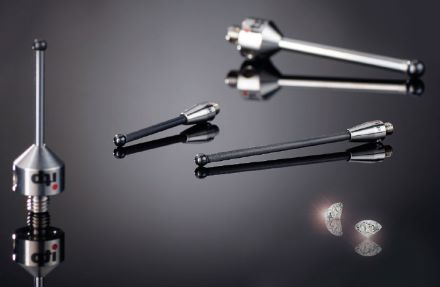
A custom design makes sense when standard products force an avoidable compromise. When the implant’s geometry pushes a standard stylus beyond its practical limits, a tailored configuration can restore proper access and stability without introducing unnecessary workarounds. The goal is not greater complexity. It is a rigid, direct configuration built around the actual feature.
itpstyli supports custom stylus solutions for CMM and related measurement applications. Providing clear application details ensures the stylus is designed to meet the specific measurement requirements. Clear inputs keep the design focused on measurement performance.
The best stylus choice is the one that supports reliable inspection without adding unnecessary complexity to the setup. Navigating diamond stylus needs for titanium implants becomes easier when the decision stays grounded in the demands of the measurement process. When standard options fall short, itpstyli develops a solution shaped around the part and inspection goal.