


 sales@itpstyli.com


9/18/26
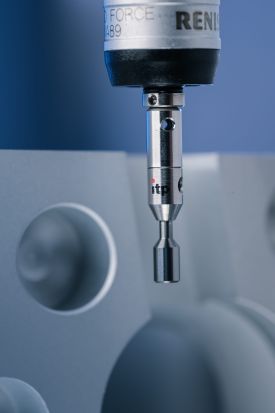
Calculating Thermal Expansion in Ceramic Styli Shafts
Temperature doesn’t have to change dramatically to affect precision measurements. When a ceramic stylus shaft warms or cools, its length changes by a small amount that may become relevant when you’re working within tight tolerances. Calculating thermal expansion in ceramic styli shafts helps you put that change into a measurable value before deciding what it means for your inspection. Once you know what the calculation represents, you can approach temperature changes with greater confidence.
Why Temperature Changes Length
When you heat a solid material, its dimensions generally change as temperature rises, with the amount depending on the material’s thermal expansion properties. The National Institute of Standards Technology (NIST) treats thermal expansion as a dimensional correction tied to temperature, original length, and the material’s coefficient of thermal expansion. As a result, you need to consider the actual shaft material before assigning a coefficient to your calculation.
Ceramic stems have an established place in precision probing, particularly when longer styli require useful stiffness without the mass associated with tungsten carbide. Thermal behavior, however, still depends on the specific ceramic grade, so you shouldn’t assume that every ceramic shaft will share a universal coefficient.
Start With Three Measurements
A basic linear thermal expansion calculation becomes manageable once you have dependable input values. Gather these values before calculating:
- Record the shaft length at the stated reference temperature
- Determine the shaft’s actual operating temperature
- Calculate the temperature difference in degrees Celsius
- Obtain the ceramic’s verified linear CTE
- Keep your units consistent throughout the calculation
Use the Expansion Formula

You can calculate thermal expansion for ceramic styli shafts by looking at the shaft length, temperature change, and the ceramic’s coefficient of thermal expansion. The coefficient should match the specific ceramic material and the temperature range you’re working with. With those values established, you can estimate how much the shaft’s length may change under your measurement conditions.
Keep your units consistent as you work through the calculation. More importantly, use a documented coefficient for the specific ceramic in your stylus rather than a general value for ceramic materials. Doing so keeps the estimate relevant to the shaft you’re using.
Reference Temperature Is Important
Dimensional measurements commonly use 20 degrees Celsius as a reference, so you’ll need to account for departures from that temperature when thermal expansion could affect the result. The amount of dimensional change depends on the original length, the temperature difference, and the material’s coefficient of thermal expansion. As a result, you need to consider the actual shaft material before assigning a coefficient to your calculation.
You also need the shaft’s temperature, not merely the thermostat setting on the wall. A component may require time to approach the surrounding temperature after arriving from a warmer or cooler environment. Moreover, your CMM, stylus assembly, and workpiece may respond differently as environmental conditions change, which is why temperature monitoring plays a role in dimensional metrology.
Shaft Length Changes Scale
As you use longer stylus shafts, temperature-related changes in length become more relevant to your measurement setup. A longer shaft will experience greater dimensional change than a shorter shaft made from the same material under the same temperature conditions. Therefore, it’s worth giving thermal expansion closer attention when your application calls for extended probing configurations.
Length also affects probing for reasons beyond thermal expansion. For example, Renishaw recommends keeping styli as short as the application permits because excessive length reduces stiffness and may affect measurement performance. Consequently, selecting shaft length requires you to balance feature access against the mechanical and thermal behavior of the complete configuration.
Straight Styli and Length
Straight styli are among the simplest probing configurations, using a spherical contact element on a straight stem that may be made from ceramic or another suitable material. When you choose one, pay attention to its effective working length, which describes the penetration available before the stem contacts the feature.
A longer overall stylus doesn’t automatically give you a better measurement setup. You should use enough reach to access the feature while keeping the configuration as short and stiff as the inspection allows.
Watch the Real Environment
A formula gives you a useful estimate, but good input determines whether that estimate represents your inspection conditions. Temperature sensors and established measurement procedures help you determine the conditions surrounding the workpiece and measurement system. Renishaw, for example, uses workpiece and axis sensors within its thermal compensation approach for CMM systems.
Check the conditions that support it by:
- Measuring temperature as close to the inspection period as practical
- Using the correct reference temperature for the measurement
- Confirming the shaft material before selecting a CTE
- Rechecking calculations after meaningful temperature changes
- Documenting the values used for traceable review
Don’t Confuse Expansion With Error
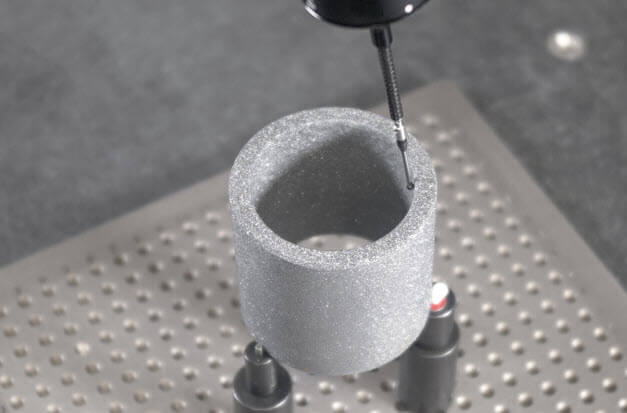
Thermal expansion tells you about the estimated dimensional change in a material under stated conditions; it doesn’t tell you the total measurement error of a CMM. Therefore, you shouldn’t automatically subtract a calculated shaft expansion from every measured result unless your validated measurement procedure calls for such a correction.
Use the calculation to understand scale and support your uncertainty assessment. When tighter tolerances raise the stakes, follow your CMM manufacturer’s compensation procedures and your organization’s established metrology practices.
Put the Number in Context
Once you know the estimated length change, ask whether it’s large enough to influence the decision you’re making from the measurement. A calculated value becomes useful when you compare it with the inspection requirement and the broader uncertainty of your process. That context keeps a small theoretical change from receiving too much weight while preventing a relevant thermal effect from being overlooked.
Thermal expansion may involve a compact equation, but using it well requires you to know exactly what you’re measuring and which material value belongs in the calculation. When you identify the ceramic correctly and work from a meaningful temperature difference, you can judge the shaft’s dimensional change in terms that connect directly with your inspection requirements.
itpstyli supplies replacement styli and custom solutions for gear-measurement applications, giving you another resource when your probing configuration requires a specific geometry. Explore the available stylus options or discuss custom configurations with us when your next measurement setup calls for the right combination of reach, material, and application fit.