

 sales@itpstyli.com


2/25/26
How a Custom Stylus Can Cut Inspection Cycle Times
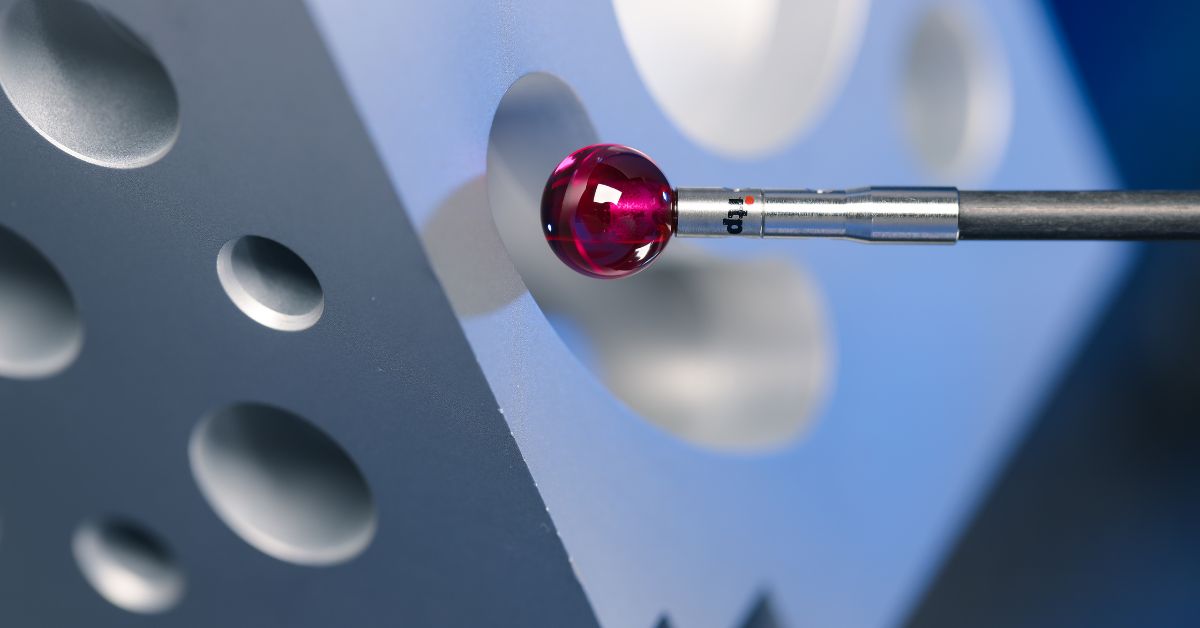
Production doesn’t slow down because parts are hard to machine; it slows down when inspection can’t keep pace. On high-value components, every extra probe change, cautious scan, or rerun quietly chips away at throughput.
Forward-thinking manufacturers are taking a closer look at how a custom stylus can cut inspection cycle times by reengineering the one component that physically connects the CMM to the part. When that connection is optimized, inspection shifts from being a constraint to becoming a competitive advantage.
The Hidden Ways Standard Styli Slow Down Inspection
Off-the-shelf styli are for broad compatibility rather than part-specific efficiency. When geometry or feature depth falls outside those general parameters, programmers compensate within the software, adding alignments or segmented routines that quietly extend inspection time.
Mechanical compromises add further drag. Multiple extensions can affect balance and movement dynamics, while clearance limitations force longer travel paths between features. Although each adjustment seems minor, together they create longer and less predictable cycle times across production runs.
How Custom Styli Directly Reduced Cycle Times
Cycle time improvements become measurable when the stylus design supports the inspection strategy instead of limiting it. A purpose-built configuration removes inefficiencies that software adjustments alone cannot fix, creating a more streamlined measurement process from start to finish.
Reducing Probe Changes and Reorientations
Probe changes introduce idle movement, rack engagement, and verification steps that extend program duration. Engineering a custom stylus to reach multiple features from a single orientation reduces or eliminates transitions. Optimized length and tip geometry capture more features without swapping assemblies or reindexing the head. As a result, programs run with fewer interruptions and a more continuous measurement flow.
Optimizing Reach for Complex Geometries
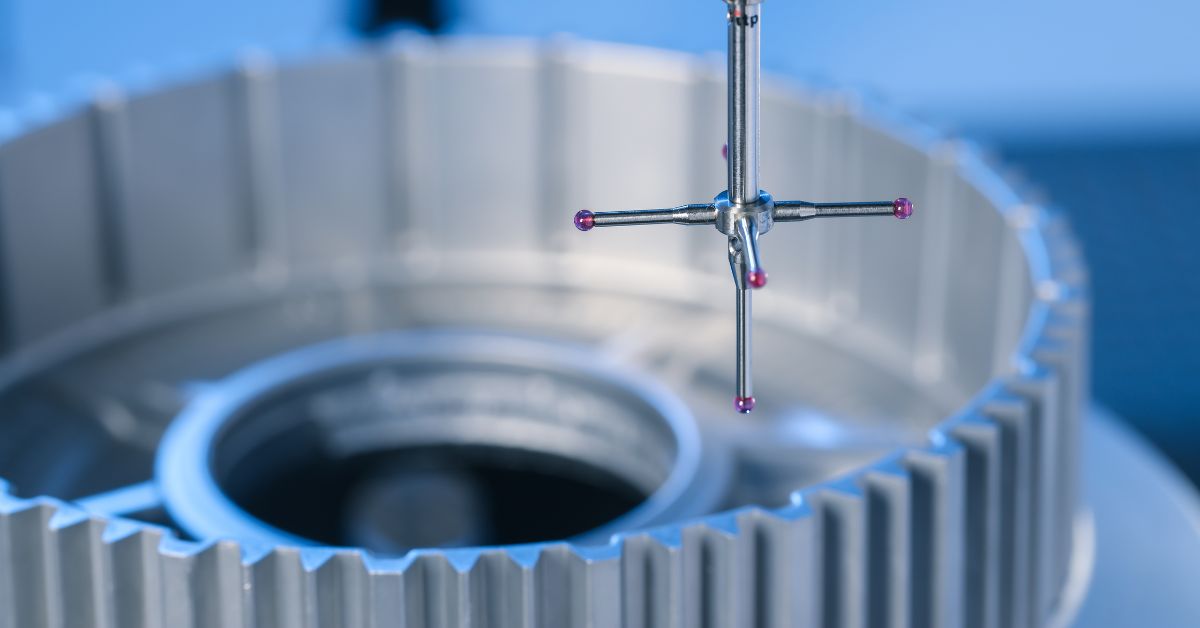
Complex parts with deep cavities, back-facing features, or tight clearances require indirect measurement paths when using standard styli. A custom configuration provides the exact reach, clearance, and angle required to access those features directly. Direct access reduces part repositioning and simplifies toolpath logic within the CMM program. Consequently, inspection cycles remain consistent even on intricate or precision-machined components.
Increasing Scanning Speeds Through Better Stiffness
Extended or poorly balanced stylus assemblies can flex during dynamic scanning, forcing programmers to reduce speed to maintain data quality. Customizing a stylus with appropriate shift diameters and material selections maintains rigidity at required lengths. Greater stiffness supports higher scanning speeds without compromising repeatability. With improved stability, the machine operates closer to optimal performance rather than being limited by deflection concerns.
Improving Accuracy To Reduce Re-Runs
Inspection time increases drastically when features must be remeasured due to inconsistent results. A custom stylus aligns ball size, geometry, and configuration precisely with the feature being inspected, improving contact consistency. Stronger repeatability reduces the need for verification passes or full program reruns. Eliminating those secondary checks protects throughput and keeps inspection aligned with production pace.
Real-World Applications That Benefit Most From Purpose-Built Styli
Certain industries see measurable performance gains when stylus configurations are engineered around their specific part geometries and production demands.
- Aerospace Manufacturing: Deep cavities, intersecting planes, and complex internal features require precise reach and stability to maintain efficient inspection routines.
- Medical Device Production: Tight radii and intricate contours demand accurate tip sizing and consistent repeatability to verify critical dimensions.
- Electronics and Precision-Machined Components: Small features and thin walls call for carefully balanced stiffness and geometry to protect both measurement integrity and part surfaces.
- High-Mix, Low-Volume Shops: Frequently changing part designs benefit from purpose-built solutions that minimize repeated probe reconfiguration and setup time.
Across these environments, optimized styli support consistent cycle times and help inspection keep pace with production requirements.
What “Custom” Can Actually Mean: Types of Customizations Available
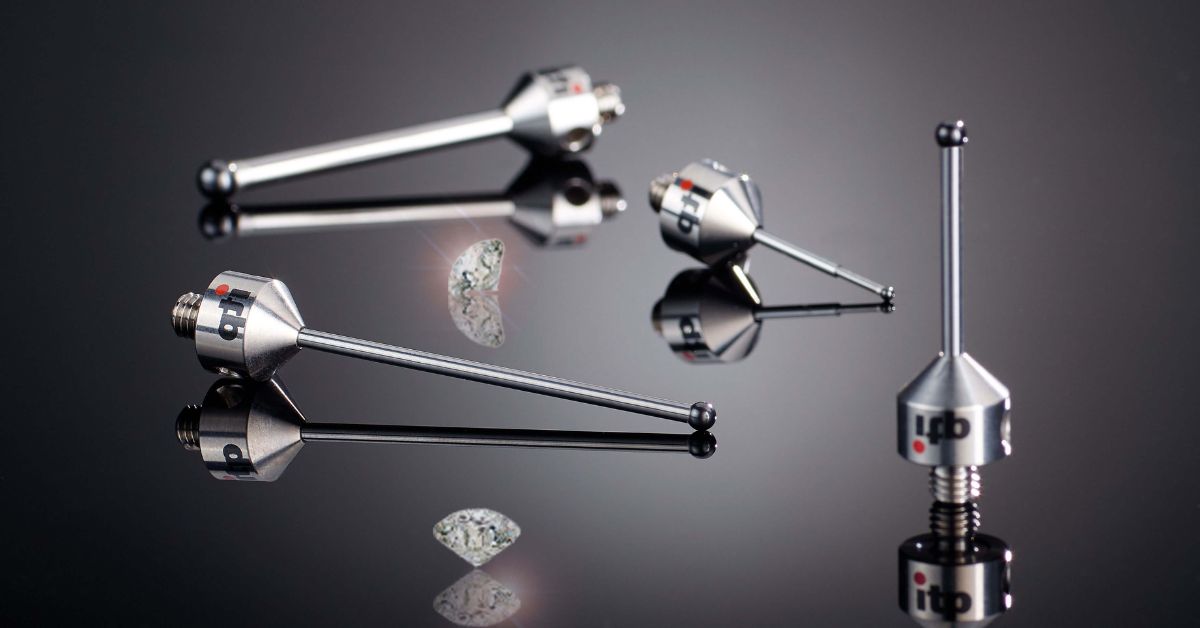
Customization extends beyond simple length adjustments. Manufacturers can specify ball material, shaft diameter, thread size, and overall assembly configuration. Ruby, silicon nitride, and other tip materials support different surface and wear requirements.
Angular configurations enable access to features at fixed offsets. Specialized extensions can be engineered to maintain stiffness while reaching deeper cavities. In some cases, engineers can develop entirely new geometries to solve unique inspection challenges.
For teams seeking customized precision styli for metrology, customization means aligning every dimension and material choice with the measurement task at hand. Rather than adapting parts to standard hardware, the stylus adapts to the part.
How To Know When You Need a Custom Stylus
Recurring probe changes within a single program signal opportunity. Frequent index moves or repeated recalibrations suggest that the geometry is not optimized. Slowed scanning speeds due to deflection concerns provide another indicator.
Unexpected measurement variation between runs can also point to a stylus mismatch. When programmers routinely create workarounds for reach limitations, underlying hardware constraints deserve review.
Evaluating inspection programs for non-value-added motion offers clarity. If substantial time is spent repositioning rather than measuring, a purpose-built stylus may provide a straightforward solution.
The ROI: Why Custom Styli Pay for Themselves Quickly
Inspection equipment represents a notable capital investment. Improving utilization without purchasing additional machines delivers immediate financial benefit. Even small cycle time reductions multiply across hundreds or thousands of parts.
Reduced reruns lower labor costs and free skilled operators to focus on higher-value tasks. Faster inspection also shortens overall production lead times, improving on-time delivery performance.
Compared to the cost of machine downtime or additional CMM purchases, a custom stylus investment is modest. Payback occurs within weeks when applied to high-frequency inspection routines.
What To Look For in a Custom Styli Provider
Selecting the right provider starts with proven metrology experience. A capable partner takes time to understand part geometry, inspection strategy, and machine setup before recommending a configuration. That level of evaluation ensures the stylus enhances performance instead of forcing programming compromises.
Responsiveness also plays a critical role. Tight production schedules demand quick manufacturing and dependable shipping to prevent inspection delays. Consistent material quality and controlled manufacturing processes further protect long-term measurement stability.
For manufacturers ready to improve inspection efficiency, itpstyli delivers application-focused custom solutions with fast turnaround and competitive pricing. Partnering with a specialist ensures your stylus is engineered to support throughput, accuracy, and production goals from day one.
Inspection performance reflects the small engineering decisions made upstream. Teams that evaluate stylus design with the same rigor as machining strategy quickly see how a custom stylus can cut inspection cycle times in measurable, repeatable ways. When the probe configuration aligns precisely with part geometry, throughput increases without adding equipment or labor. For manufacturers focused on efficiency and precision, optimizing the stylus is a practical step toward stronger overall process control.